01
THE PEOPLE
BEFORE THE PIECES.
An invitation to a better kind of game night.
A seat for
every
play style.
Different people bring different pleasures to the table. Make room for all of them.
Hear the whole table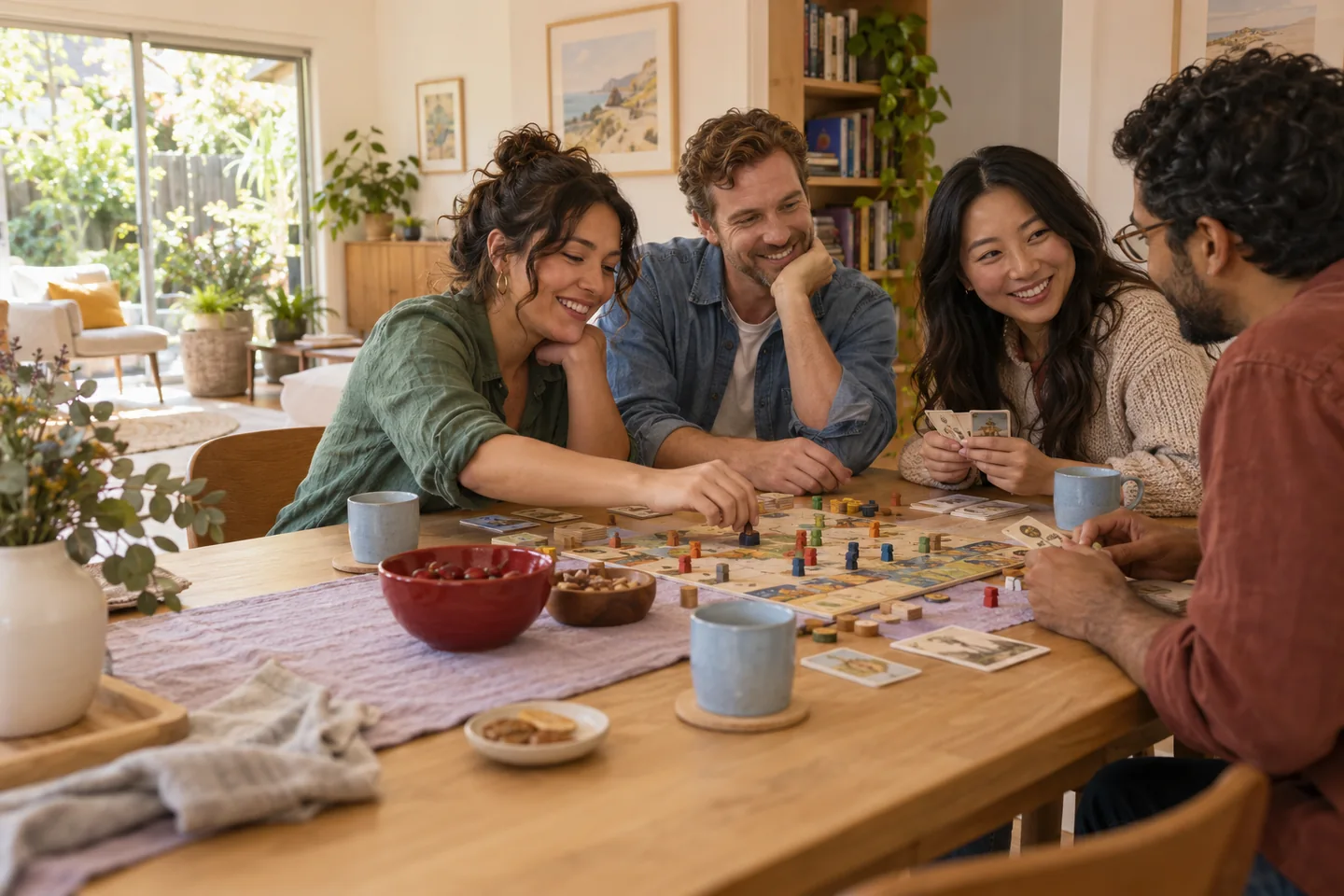
The box is only
half the story.
Who is joining? What feels enjoyable tonight? A little conversation can do more for an evening than another complicated rule.
Pavoreni is an independent guide to game formats, shared choices and the rhythm of a night in. No shop, rankings or paid recommendations.
02 A WARM START

Leave a little
room for arriving.
Not everyone reaches the table with the same energy. Offer a seat, explain the shape of the evening and leave time for people to settle.
A quick invitation is more useful than a performance: “Would you like something talkative, thoughtful or collaborative?”
Read the hosting notes03 THE TABLE BALLOT
More than the
loudest preference.
Pass the question around. This small ballot shows the spread of interests, including a tie, without deciding for the group.
Ask each person for one preference. No names, no scores and no saved profile.
THE TABLE SO FAR
Every voice starts here.
Choose a preference for each occupied seat.
Together0
Tactical0
Story0
Social0
A count opens a conversation. It does not overrule a person’s access needs or willingness to play.
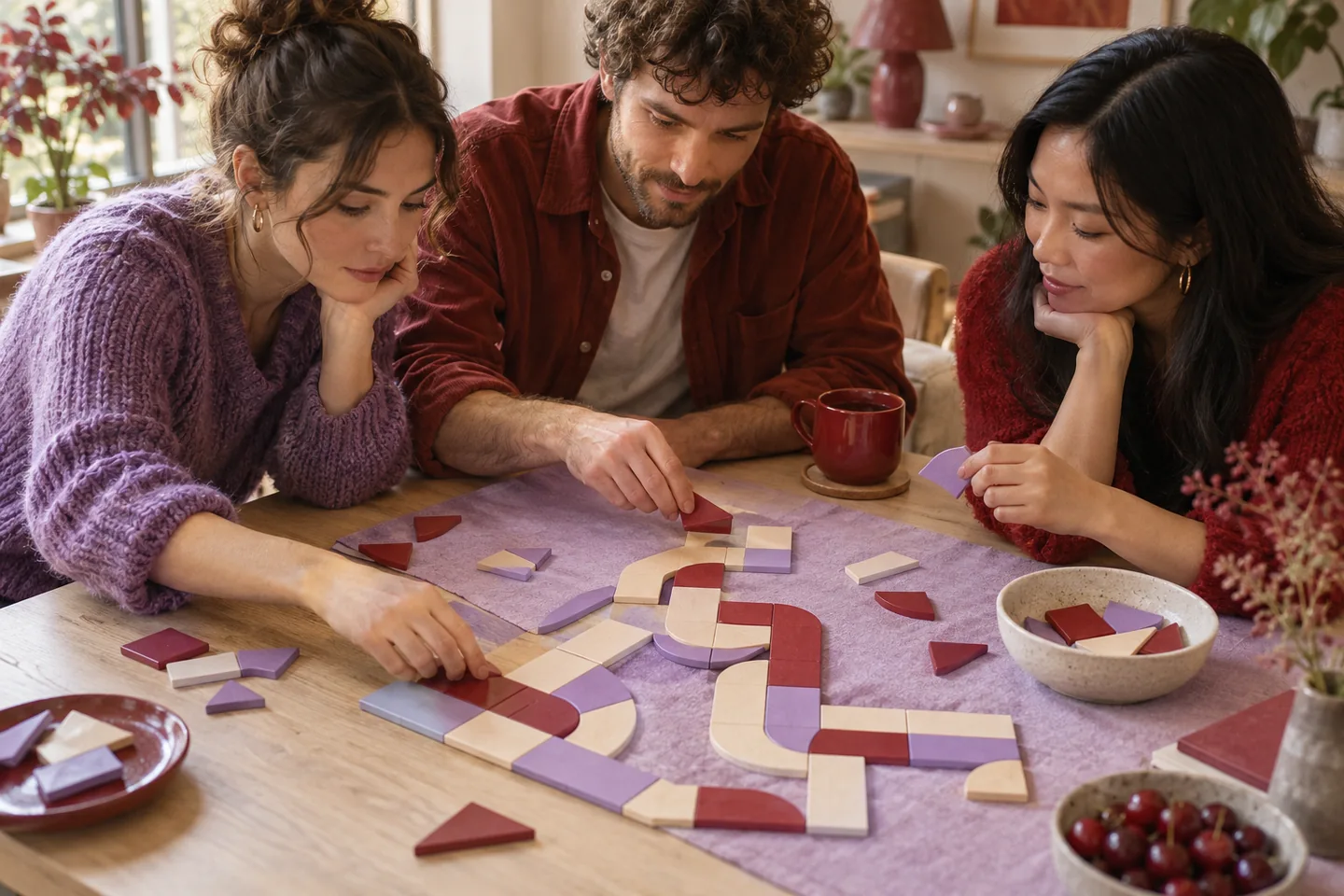
04 FOUR WAYS INTO AN EVENING
05 SHARED CHALLENGES
On the same side.
Still your own voice.
Cooperative play can bring a group together. It works best when advice leaves space for the active player to decide.
Make cooperation feel shared06 THE PLEASURE OF A DECISION
Give a good
choice some air.
Tactical games invite attention to the present position. Explain what a turn looks like, then let players discover their own reasons for a move.
Agree how much thinking time feels comfortable. A quiet pause need not become a running commentary from everyone else.
A thoughtful table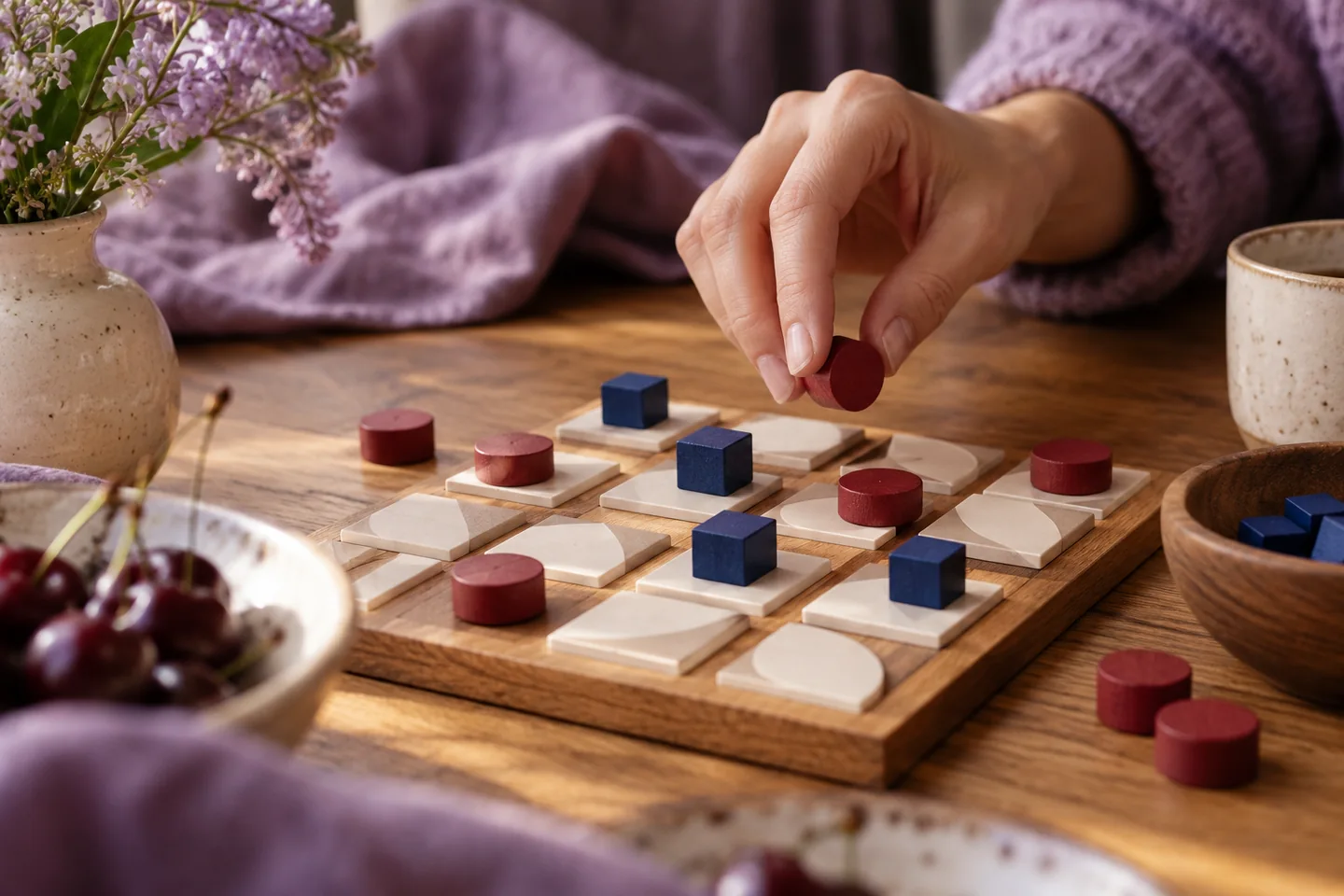
07 THE EVENING PROGRAMME
A plan with
room to move.
Add stages, change their order and see whether the total fits. The sample is a starting conversation, not a timer or a promise.
Estimates are planning blocks, not the duration of a particular published game. Allow extra time for your group.
08 MAKE-BELIEVE, TOGETHER
The best bit
might be unexpected.
A story prompt can be a place to begin, rather than a test of being funny or quick. Let people pass, listen or contribute in a way that suits them.
Stories without the spotlight09 A SMALLER TABLE
02 PEOPLE ONE SHARED EVENING
Two is a whole
table of its own.
A game for two can be companionable, competitive or quietly collaborative. Check that the rules were designed for that player count and that both people enjoy the format.
A table for two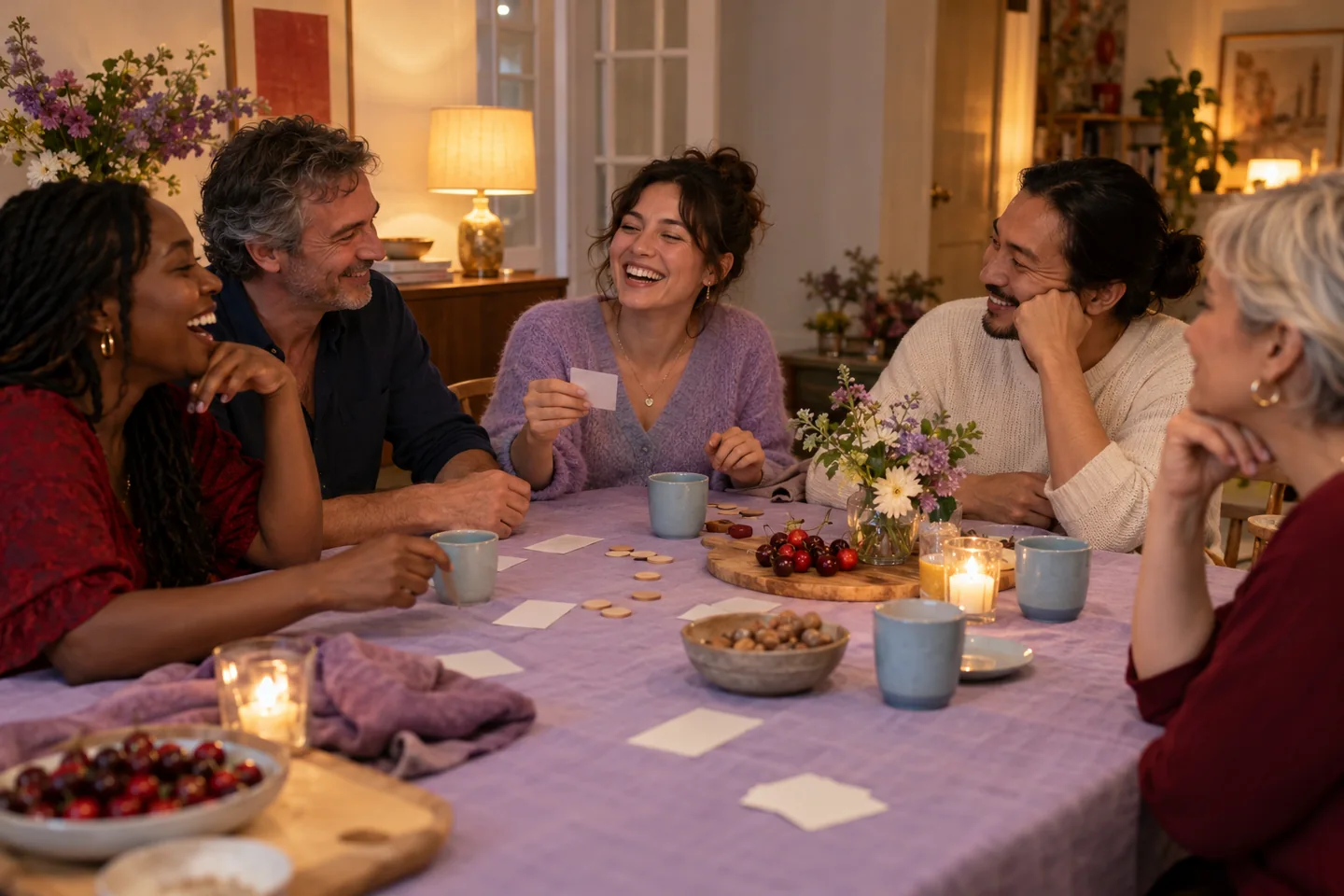
10 THE SOCIAL SIDE
A game can start
the conversation.
It does not have to occupy every minute of it. Choose prompts everyone can comfortably decline, and avoid turning a playful question into a demand for personal information.
11 WORDS ON THE BOX
A few terms.
A clearer choice.
Drafting
Players choose from a changing shared selection. The remaining choices matter as much as the item taken.
Set collection
Players gather combinations of items. The interesting question is often which set is worth pursuing now.
Hidden information
Some information is private or unknown. Confirm that everyone understands what can and cannot be shared.
Simultaneous choices
Players choose at the same time before revealing or resolving decisions. The rules still need to explain any conflicts.
12 BEFORE THE FIRST TURN
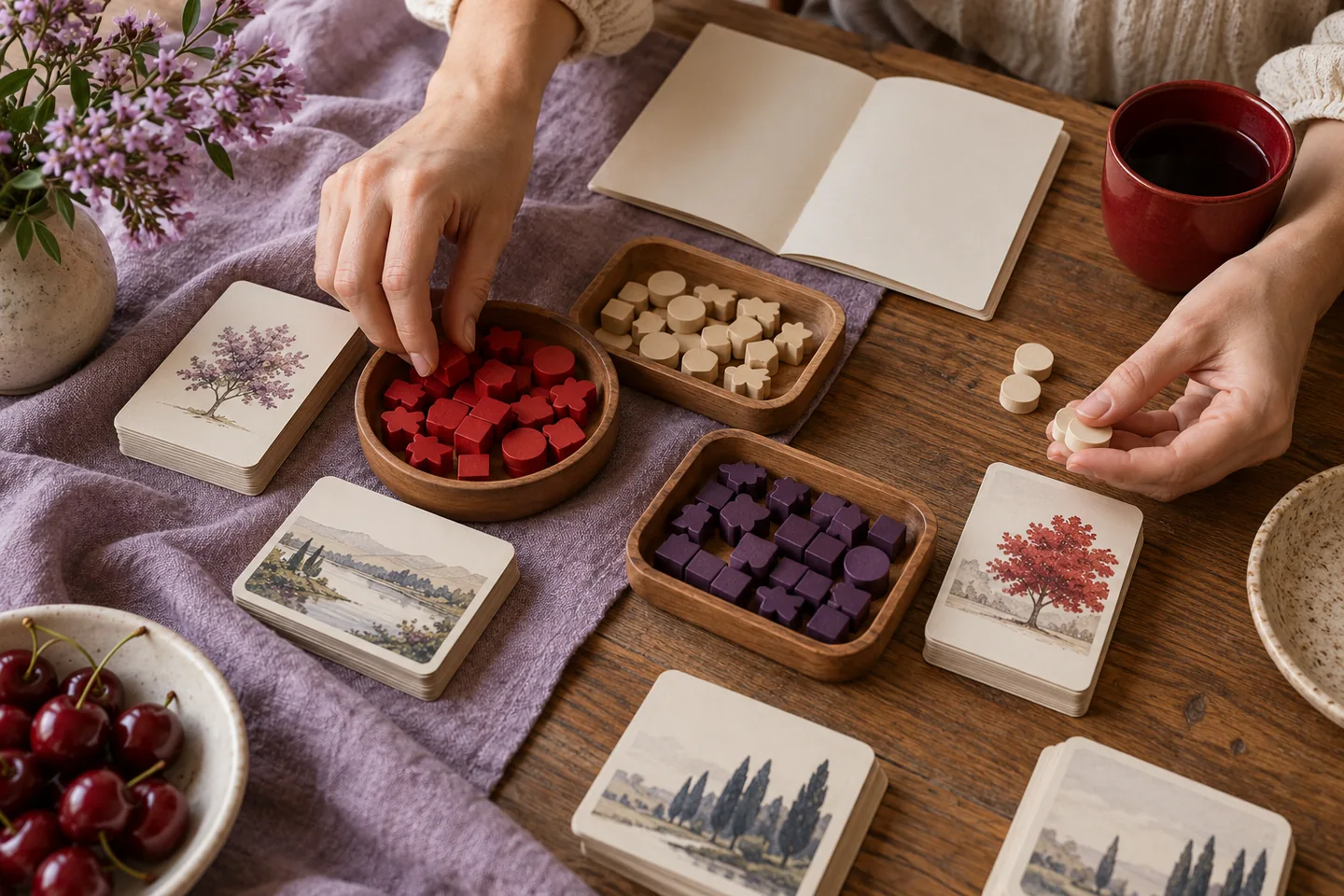
Set the table.
Then set expectations.
- Show the goal. Explain what players are working towards.
- Show one turn. Use a small example before listing exceptions.
- Invite a question. Leave a pause before the first real decision.
13 THE BREAK BELONGS HERE
There is no prize
for never pausing.
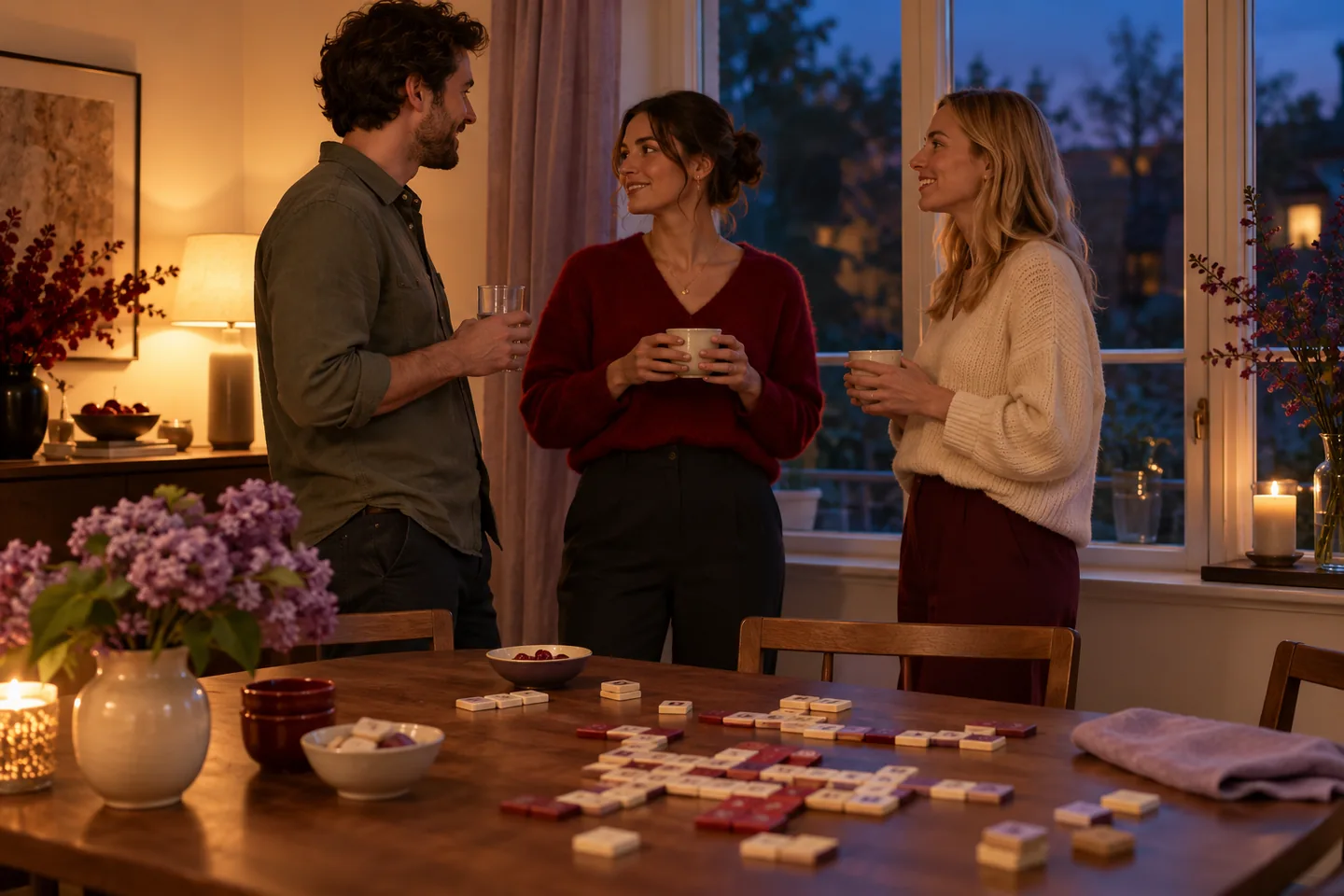
Make breaks ordinary. People can stretch, get water or simply step away without giving a reason. A flexible evening is easier to enjoy.
14 AFTER THE LAST ROUND
End with something
worth returning to.
Ask what felt good and what could be easier next time. A specific observation is more useful than deciding who was a “good” or “bad” player.
Pack away together if people want to help. An unfinished game can still have been an enjoyable evening.
15 QUESTIONS BEFORE YOU PLAY
A little more
table talk.
5 questions shown
Does the ballot pick a specific game?
It counts format preferences only. Discuss the result, then check the actual game rules, player count, access needs and people’s willingness to join.
Are these games for sale?
Pavoreni is not a shop or marketplace. The photography uses original illustrative scenes and generic components rather than a product catalogue.
Can I change the programme?
Yes. Add, remove or move stages. The duration is the sum of the planning blocks you chose, not a prediction of how a particular group will play.
Is my ballot saved?
No. Ballot and programme changes stay in the current page memory and disappear when the page reloads. No player names are requested.
Can everyone pass on a game?
Participation should be a choice. Offer another role or activity without asking someone to justify a preference or discomfort.
16 A NOTE FOR NEXT TIME
What would make
this guide more useful?
Send a question about the tools or a correction to the reading pages. Keep other people’s personal details out of your message.
[email protected]Mailbox operation is not verified. The form confirms storage only.
17 OUR SMALL EDITORIAL PROMISE
More listening.
Less perfect hosting.
This guide offers ways to talk about play. It does not rate your friends, guarantee an evening or speak for a game publisher.
Meet the idea behind Pavoreni