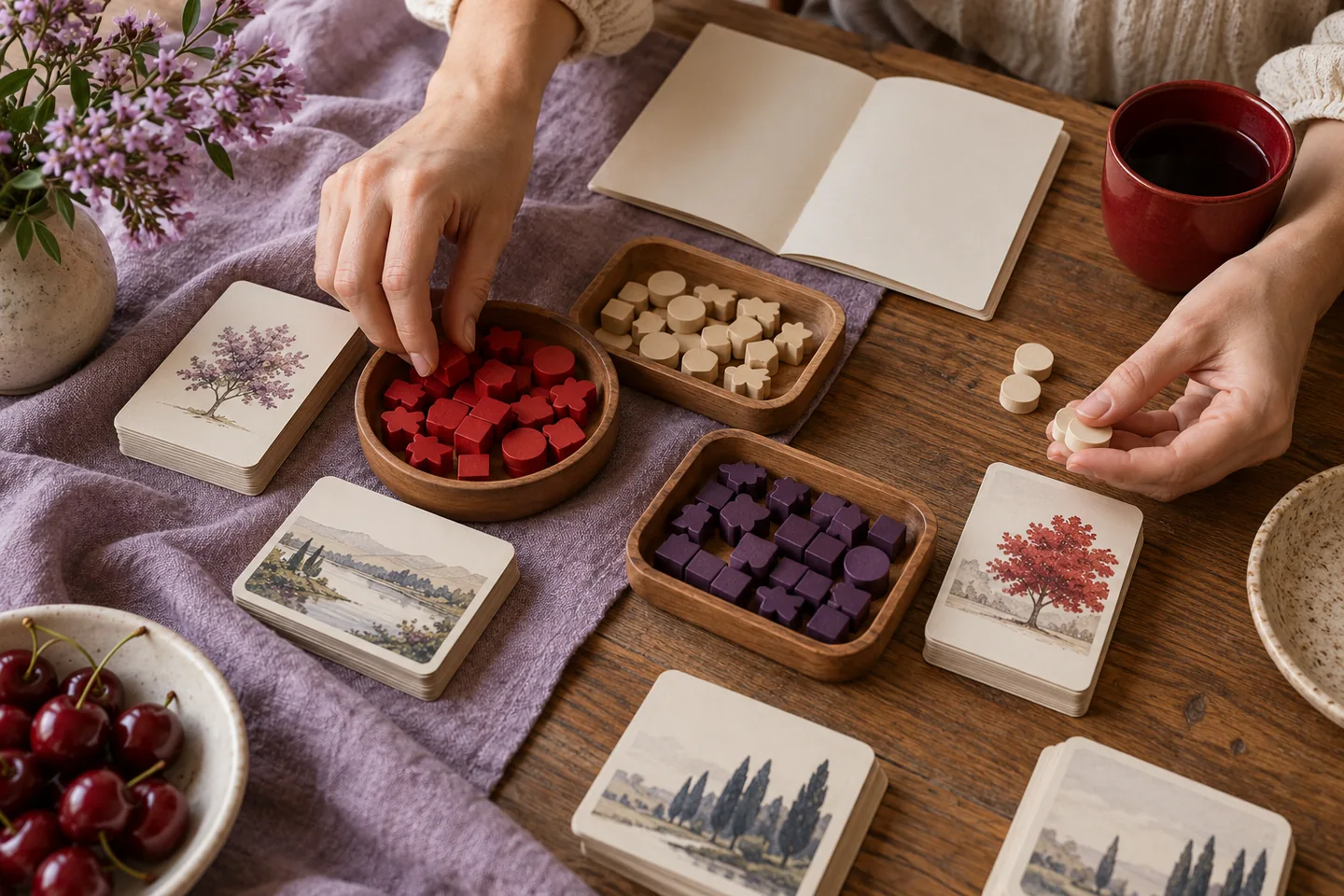
Start with people and access
Ask about seating, lighting, noise and the kinds of activity people want to join. Avoid making someone disclose personal information just to request a practical adjustment.
Make the plan easy to understand
Explain roughly when you will begin, whether there is a main game and how people can leave or join a break. A plan is useful because it can be discussed, not because it must be obeyed.
Introduce the goal before exceptions
Show what players are trying to do, how a turn works and how the game ends. Bring in additional details when they become relevant, while remaining faithful to the actual rules.
Keep the table usable
Leave space for components, drinks and people’s belongings. Check that everyone can reach or read what they need. Do not assume that the same arrangement suits every person.
Close without a verdict on the evening
Ask what people might enjoy next time. Some will want another play; others will want a different format. Both answers are useful without being a rating of the host.